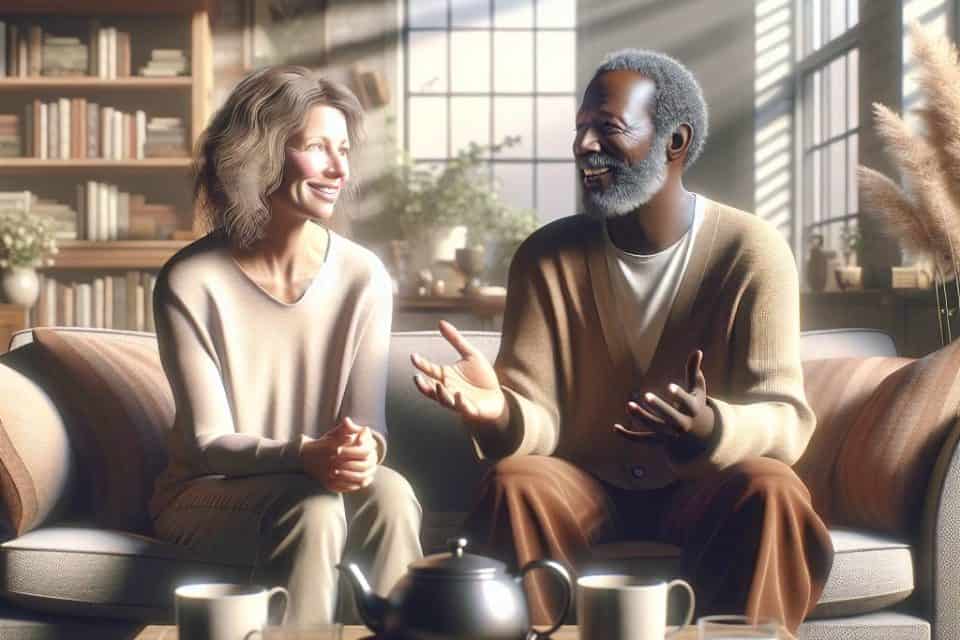
I once thought being a good friend meant simply being available, like an old coat hanging in the closet, ready to be worn whenever someone needed warmth. But let’s be honest—sometimes life gets in the way, and that coat turns into a forgotten relic, gathering dust while you’re caught up in your own whirlwind. I remember a time when I missed a friend’s birthday because I was “too busy” chasing my own dreams, wrapped up in my little bubble of self-importance. The truth is, I was just too lazy to make an effort. I promised myself I’d do better, that I’d be the kind of friend who shows up, not just physically but emotionally. Yet, the reality check was a punch in the gut, and it made me rethink what being a true friend really means.

So here we are, peeling back the layers of what it takes to be a friend who’s more than just a shadow in the background. This isn’t about grand gestures or scoring points; it’s about the quiet, powerful act of being present. We’ll dive into those little things that matter—like truly listening, showing empathy, and appreciating the moments that often slip through the cracks. Together, we’ll explore how to weave these threads into the fabric of our friendships, creating connections that aren’t just strong, but irreplaceably human.
Table of Contents
Listening Like a Therapist, Without Charging $200 an Hour
If you think being a good friend is just about nodding and smiling, welcome to the world of superficial relationships. Real listening, the kind that makes you feel seen and understood, is an art—an art that doesn’t demand a PhD or a hefty price tag. Imagine the way a therapist leans in, not because they’re acting, but because they’re genuinely interested in every angle of your story. You don’t need a couch or a clipboard to apply this kind of attentive presence. It’s about letting your friend know that their words aren’t just bouncing off a wall but landing in a place where they can take root and grow.
So how do you listen like this? First, it’s all about being truly present, which is harder than it sounds in a world that’s constantly pulling at our attention. Put down the phone. Turn off the inner monologue that’s preparing your next brilliant comment. Just be there, in the moment, with them. And while you’re at it, embrace silence. Sometimes, the most profound part of the conversation is the silence that follows a shared truth. It’s in those pauses that empathy blossoms. You’re not there to fix, solve, or even judge. You’re there to witness, to acknowledge, to say with every fiber of your being, “I’m here, and I hear you.
Empathy isn’t about solving someone else’s problems; it’s about understanding their feelings even if their experiences are light-years away from your own. So, when your friend shares their worries, resist the urge to jump in with solutions or anecdotes that steer the spotlight back to you. Instead, ask questions that dive deeper, questions that say, “I care about the depths of your story.” It’s this kind of listening that turns an ordinary friendship into something extraordinary—a connection as rich and layered as the countryside landscape I call home, where every detail, every whisper, transforms the mundane into a tapestry of shared human experience.
The Art of Genuine Presence
To truly be a better friend, let your presence be the gift that turns the mundane into a moment worth cherishing.
The Unscripted Art of True Friendship
In the grand tapestry of human connection, I’ve found that the threads of empathy and presence weave the strongest bonds. It’s not about grand gestures or rehearsed empathy. It’s about those quiet moments when you sit in silence with a friend, the unsaid words conveying volumes. It’s the art of truly listening, where you aren’t just waiting for your turn to speak. Instead, you absorb their stories, their struggles, and their joys as if they were your own. This journey has taught me that being a friend is less about doing and more about simply being—being there, being aware, being genuinely interested.
As I walk this path, I realize that showing appreciation doesn’t need to be a loud proclamation. Sometimes, it’s the subtle nod or the shared laughter over a mundane cup of tea that speaks the loudest. It’s these unplanned, unscripted moments that etch themselves into the core of our friendships. They remind me that the extraordinary is often tucked away in the folds of the ordinary. So here’s to embracing the messy, the imperfect, and the beautifully real. Because in the end, isn’t that what friendship is truly about?
